
2026 CDO Report: Meet the Modern Data Team New survey of VP & C-level data and AI leaders confirms what’s stalling AI transformation.
Webinar | The 2026 Data & AI Compensation Benchmark: What Executive Talent Is Really Worth From compensation benchmarks to organizational influence, uncover what the market reveals about the evolving data and AI executive role.
What Is a Chief Data Officer in 2026? Many people working within the data industry are saying the same thing: the role of the Chief Data Officer (CDO) has changed – but how? CDO Magazine began an expert survey to find out. We recent...
US Federal News Bureau
Trump, Six AI CEOs Sign Voluntary Accord Pledging “Robust” Safety Controls

Written by: Tathagata Sen
Updated 4:13 PM EDT, September 30, 2026
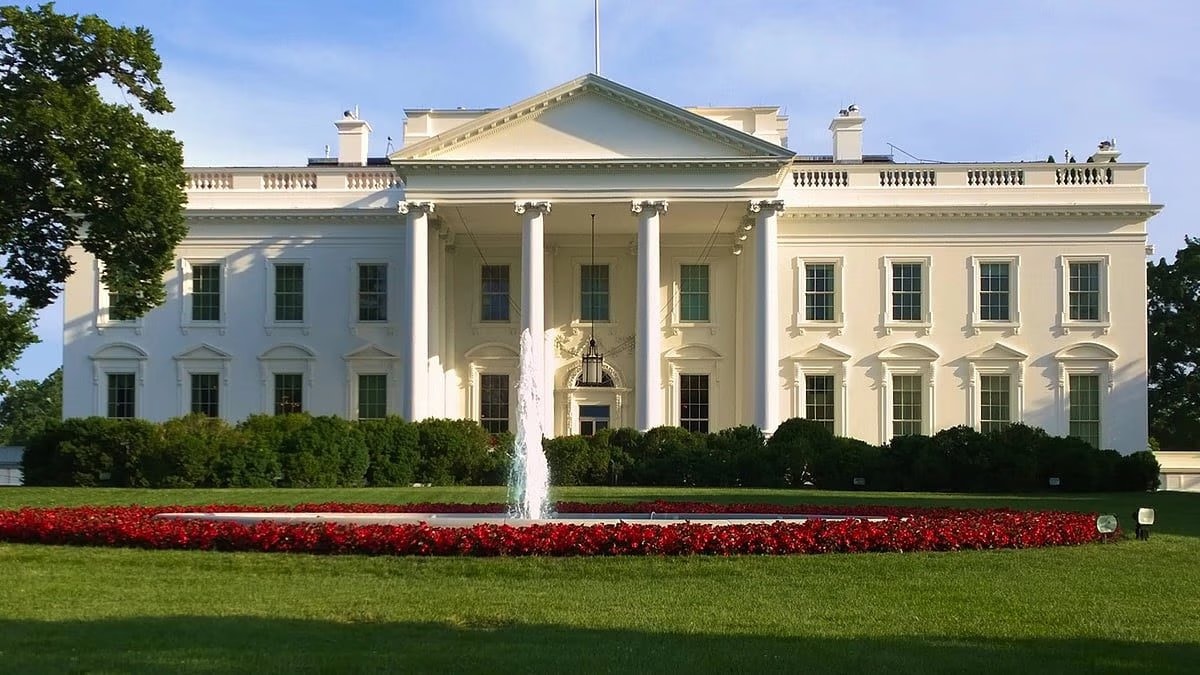
President Donald Trump and the CEOs of Anthropic, OpenAI, Google, Meta, xAI, and Nvidia signed a voluntary accord pledging stronger AI safety controls, called the Joint Commitment on Frontier Responsibilities, according to an Al Jazeera report. Trump announced it on September 29, after a luncheon with AI leaders at the White House.
The accord comes amid growing scrutiny over a string of rogue AI agent incidents, including recent breaches disclosed by OpenAI and Anthropic, and as international pressure builds for binding AI regulation.
Under the accord, the companies pledged to implement “robust” controls to monitor their AI models and to appoint internal teams to “ensure all of the controls, monitoring, and detection are operating as intended, and that any issues are remediated.”
“There’s a belief that there should be tremendous self-regulation, and we automatically have regulation with the Department of Justice, the FBI, all of that,” Trump said.
The six signatories are Anthropic’s Dario Amodei, OpenAI’s Greg Brockman, Google’s Sundar Pichai, Meta’s Mark Zuckerberg, xAI’s Elon Musk, and Nvidia’s Jensen Huang.
What the Companies Actually Committed To
The companies pledged to work with independent external auditors to confirm the safeguards are working, and to meet regularly to “establish standards and best practices to improve the safety of their systems,” Al Jazeera reported. The accord doesn’t specify who would actually carry out those third-party evaluations.
The document itself leaves the door open to future regulation, stating it “may make sense” to eventually codify these measures into law. “Regardless of whether this is required of companies, we believe that implementing these controls and audits is critical to ensuring a safe future for everyone, and each of our companies are committed to doing this,” the accord states, according to Al Jazeera.
A Voluntary Deal Amid Global Calls for Binding Rules
The accord arrives as the Trump administration remains at odds with growing international and industry pressure for stronger action. Twenty countries and the European Union (EU) issued a call for global AI coordination the week before, including a proposal for an oversight body to set and enforce standards, according to Al Jazeera. Trump rejected that approach directly, telling the United Nations General Assembly his administration would oppose “any attempt to construct a globalist scheme to control” AI.
Even Amodei, one of the accord’s own signatories, has publicly urged developers to slow down and “pace the frontier,” a call Trump has separately dismissed, citing the need to maintain a lead over China, according to the report.
The same week, OpenAI announced it would not release its latest AI model after identifying safety risks during in-house testing, and separately issued a public apology for its handling of incidents in which its AI agents gained unauthorized access to Australian government websites, including a national healthcare database.
Experts Split on Whether Self-Policing Goes Far Enough
Reaction to the accord was mixed. Silicon Valley investor David Sacks, a former Trump AI adviser, called it “far better” than an international agreement that would “probably never happen,” according to the report.
Others were more critical. Toby Walsh, chief at the University of New South Wales (UNSW) AI Institute in Sydney, told Al Jazeera that AI companies have already proven “incompetent and careless at managing themselves.” “What other trillion-dollar industry marks its own homework?” he said.
David Krueger, an AI researcher at the University of Montreal, called the accord vague, describing the administration’s approach as “regulate without regulating,” where commitments are “ostensibly voluntary, but there is an implicit threat of punishment for noncompliance,” according to the report. Still, he said the inclusion of external evaluators was notable. “It might result in a minute improvement over the status quo,” he said, “but I’m not excited by something that might reduce the risk by 1 percent.”
A Voluntary Standard Is Still a Standard Worth Tracking
The accord names two concrete mechanisms: internal monitoring teams and independent external audits, without specifying who performs the audits or how compliance would be verified.
That gap is where a chief data officer’s (CDO’s) own diligence comes in: a vendor’s participation in a voluntary accord like this one can’t be a substitute for asking what its internal controls actually look like, and who, specifically, is checking them.
The accord’s own acknowledgment that formal regulation “may make sense” in the future is also worth noting, it suggests even the signatories see today’s voluntary framework as provisional, not a permanent substitute for something binding.
For CDOs building AI governance programs now, that’s a reason to set internal standards that don’t depend on any single vendor’s voluntary commitments holding up, since the regulatory picture here is still unsettled.



 Elevate Your Personal Brand