
The Evolving Role of the Data, AI, and Analytics Executive: 2026 Benchmark Survey
How to Build a CDO Career That Lasts Beyond 3 Years: Lessons From a 10-Year Stint In the Same Organization Data has never received more executive attention. Organizations are actively pouring money into data and AI, boards are demanding answers, and CEOs expect ROI. Yet Chief Data Officer (CDO) tenures are...
CDO Magazine Unveils the Top 25 Chicago Data & AI Leaders 2026 CDO Magazine proudly presents the Top 25 Chicago Data & AI Leaders 2026, recognizing the executives leading high-impact data, analytics, and AI initiatives across some of the world’s most influential...
US Federal News Bureau
AI-Piloted F-16 Marks Major Autonomous Flight Breakthrough Under DARPA’s VENOM Program

Written by: Pritam Bordoloi, Senior Reporter, CDO Magazine
Updated 5:08 AM EDT, July 30, 2026
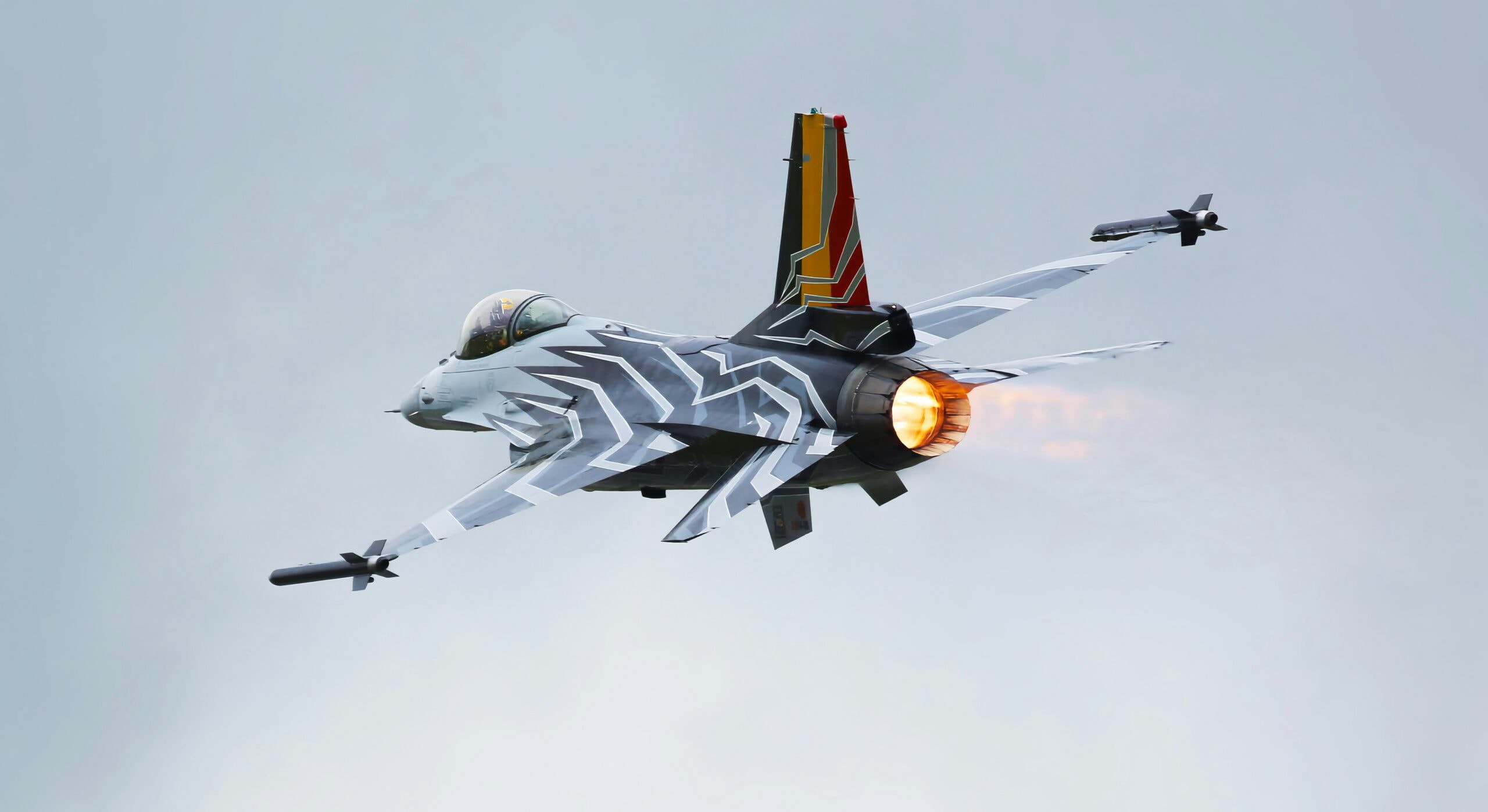
Photo credit: Unsplash.com
A modified F-16 fighter jet autonomously controlled by an AI agent has successfully completed flight operations under the Viper Experimentation and Next-generation Operations Model (VENOM) program, marking a significant milestone in the advancement of military aviation.
The achievement, announced by the Defense Advanced Research Projects Agency (DARPA), took place at Eglin Air Force Base in Florida. VENOM is a joint initiative between DARPA and the U.S. Air Force aimed at transforming operational fighter aircraft into testbeds for advanced AI technologies.
Unlike previous AI flight demonstrations conducted through the Air Combat Evolution program using the experimental X-62A VISTA aircraft, VENOM’s breakthrough involved an operational-fleet F-16. The test demonstrated that existing combat aircraft can be adapted for autonomous operations without requiring purpose-built platforms.
According to DARPA, the modified aircraft uses the VENOM Autonomy Kit, which integrates with flight controls and mission systems while allowing pilots to switch seamlessly between human and AI control. A pilot remains in the cockpit during testing to monitor performance and ensure safety.
“These groundbreaking flight tests of VENOM-modified F-16s advance the infrastructure needed to develop trusted, autonomous air combat capabilities. The Air Force and DARPA team have automated flight controls and sensors on a standard F-16 without changing the jet’s core software. This enables an efficient pipeline for developing dominant AI for aerial combat, allowing us to rapidly innovate for the warfighter,” said Brig. Gen. James “Fangs” Valpiani, Ph.D., DARPA program manager.
The VENOM fleet will now support DARPA’s Artificial Intelligence Reinforcements (AIR) program, which will evaluate multiple AI agents in live-flight scenarios. The initiative is expected to advance efforts such as the U.S. Air Force’s Collaborative Combat Aircraft program and explore how AI can support future human-machine teaming in aerial warfare.




 Elevate Your Personal Brand