
Nominate Now | Top 30 Healthcare Innovators 2026 List Honoring the Executives Driving Measurable Transformation and Responsible Innovation Across the Healthcare Ecosystem.
CDO Magazine Unveils the 40 Most Influential Data Leaders in Finance — North America 2026 Few industries are advancing data and AI as rapidly as financial services. From real-time payments and fraud detection to risk modeling, regulatory compliance, and AI-driven customer experiences, fina...
Leadership Summit – Columbus – Renaissance Columbus Downtown Hotel – April 16, 2026 Join top AI and Data leaders in Columbus to explore the strategies, governance, and innovations driving enterprise performance. Connect, learn, and gain actionable insights — reserve your seat today.
Opinion & Analysis
How to Build an AI Co-pilot for R&D: A Playbook for Scientists and Business Leaders

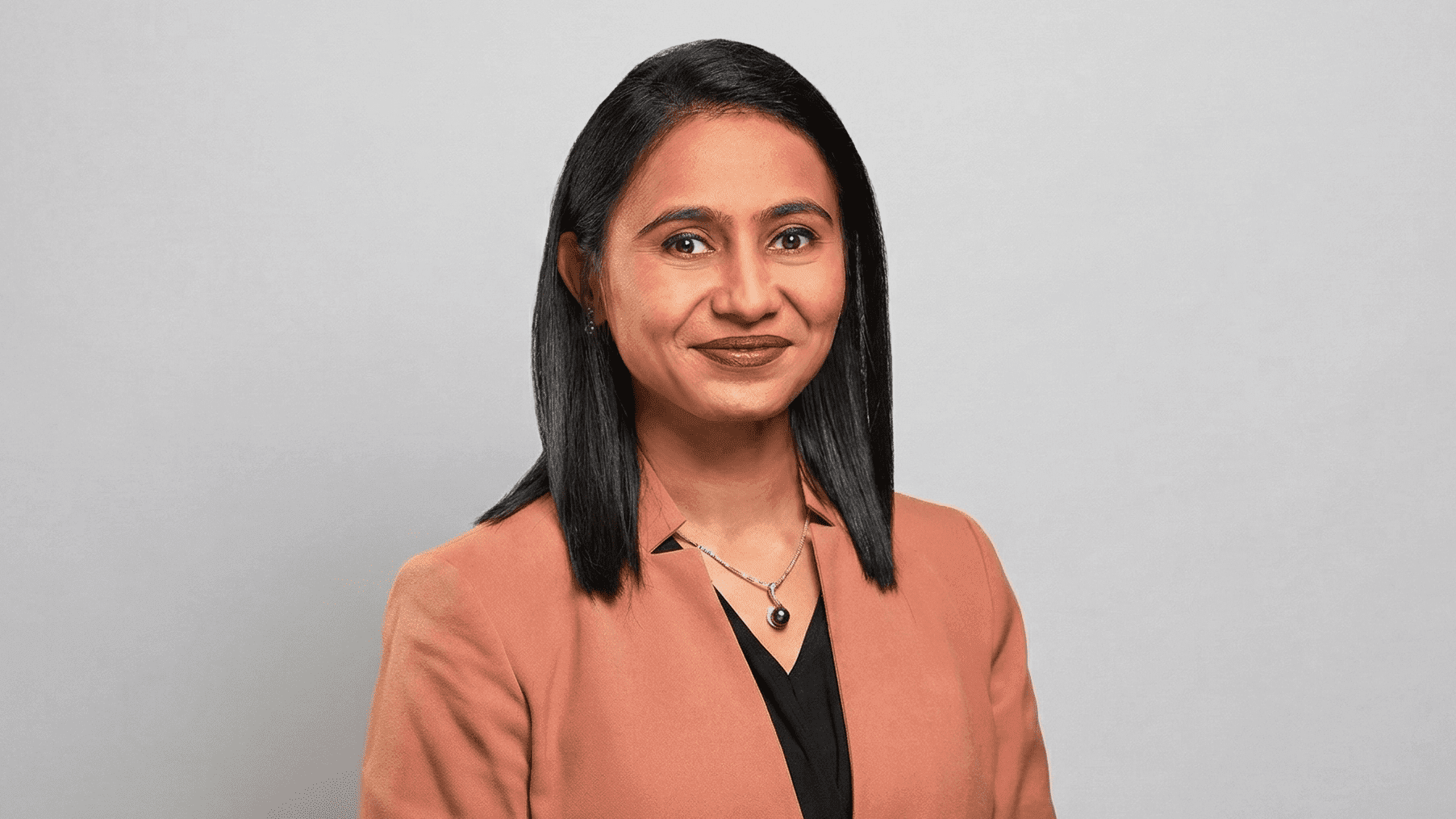
Written by: Ashwini Ghogare | Executive leader in AI and Automation for Drug Discovery
Updated 2:00 PM UTC, April 9, 2026
AI is rapidly transforming the scientific enterprise. Once regarded as a specialized tool for big data analysis, AI has matured into an expert collaborator capable of generating scientific hypotheses, designing validation experiments, running AI-enabled research labs, and accelerating AI-driven therapies.
This transition mirrors broader advances in machine learning for molecular science: from deep neural networks enabling breakthroughs in protein structure prediction such as AlphaFold¹, to generative models capable of exploring vast regions of chemical and biological space², to reinforcement-learning–guided molecular design frameworks such as REINVENT-4³, and now to foundation large language models (LLMs) trained across diverse biological and chemical data, embedding scientific reasoning context into generalizable AI systems⁴.
The rise of AI-enabled laboratories, sometimes described as “self-driving laboratories,” signals a fundamental shift: science is entering an era in which AI, humans, and machines collaborate to amplify, rather than replace, human creativity.5
For scientists, this opens unprecedented opportunities to test bold ideas, accelerate design–make–test–analyze (DMTA) cycles, and expand the horizons of experimental inquiry.
For business leaders, AI presents an opportunity to reshape organizational models, scale innovation pipelines, and orchestrate a new partnership ecosystem.
However, significant challenges remain. Organizations must rethink operating models, talent strategies, governance frameworks, and trust in AI-driven outputs. The central question is not whether AI can contribute, but how to integrate it responsibly and effectively into scientific workflows.
The goal is not to replace human expertise, but to augment it. Striking the right balance between human judgment and algorithmic recommendation will determine whether AI becomes a true R&D co-pilot.
This article examines how organizations can build an effective AI co-pilot for R&D, balancing human judgment with algorithmic capability.
Potential for human–AI collaboration in science
AI is reshaping the daily practices of experimental science, moving beyond a computational assistant to an active lab partner. For scientists, it offers new ways to expand thesis creativity, accelerate learning cycles, and deepen mechanistic insight.
1. Elevating scientific creativity towards scientific superintelligence
Foundational LLMs such as Claude, Llama, Nova, Gemini, GPTs, etc., trained on vast published and proprietary research corpora, can discover novel medical insights across disparate multimodal data sources at a fraction of the speed and propose experiments to validate these insights.6
When fine-tuned on domain-specific knowledge, it shifts cognitive effort from information retrieval to higher-level conceptual inference. Further, when the models are reinforcement trained on generated real-world experimental data within a closed-loop, their multimodal scientific reasoning evolves into a “Scientific Superintelligence” – expanded thesis creativity beyond human biases into deeper mechanistic insight.7
2. Hypothesis generation at scale to uncover real-world insights
FrontierAI models allow researchers to traverse chemical and biological space orders of magnitude (10^60) faster than human intuition alone.8 Models like AlphaFold, CHAI, BoltzGen demonstrated the potential of all-atom generative models to open entirely new avenues for generating de novo proteins and peptide-based therapies across all modalities and a wide range of biomolecular targets.1,9
Similarly, foundation models in evolutionary biology trained on high-dimensional transcriptomics data can simulate disease biology at the single-cell level, address long-standing bottlenecks in understanding structural biology, and propose non-intuitive scaffolds for cell-state-correcting therapies.10
3. Augmenting self-driving laboratories and closed-loop experimentation
AI integrated into closed-loop laboratories is delivering measurable acceleration of discovery timelines. When paired with robotics in a “self-driving laboratory,” AI systems can autonomously design and execute experiments, iteratively optimize them, and loop data back to train models with minimal human oversight.5
Insilico Medicine, for example, has advanced AI-designed compounds from computational concept to preclinical validation in under 18 months — a fraction of the traditional cycle.11,12 By guiding synthetic planning, predicting ADMET liabilities, and prioritizing assays, AI shortens iterative DMTA loops by 30–50%, giving scientists more opportunities to explore the creative and unexplored insights of discovery.
Responsibility of business leadership in AI-readiness
While much of the attention around AI in science centers on experimental capabilities, the role of business leadership is equally pivotal in driving organizational AI readiness, enabling AI to genuinely flourish as a scientific partner.
1. Organizational change management and AI experimentation
AI adoption is not a discrete project but a transformation that requires enterprise-wide integration. The CB Insights Pharma AI Readiness Index (2025) highlights leaders and laggards in this space, with those investing in integrated AI strategies consistently outpacing peers in pipeline velocity and innovation metrics.
Across organizations showing higher AI maturity, common enablers include robust data infrastructure, governance frameworks, and executive sponsorship to embed AI at all levels of the organization.13 Additionally, organizations need to identify the best approach, “breadth vs focus,” to evaluate the right AI use-cases, as broad experimentation (“more shots on goal”) is essential to surface value pockets across R&D, but sustainable AI impact comes from narrowing focus — aligning tightly with a few core KPIs to capture measurable value.14
2. Building partnership ecosystems accelerators for AI-enabled research
The complexity of AI-native research demands collaborations that extend beyond traditional alliances. Business leaders increasingly find themselves orchestrating complex partnership networks to build differentiated, non-commoditized capabilities.
Partnership ecosystems spanning open-source consortia for open-science collaborations15, cloud and compute providers that enable scalable experimentation and cross-disciplinary research16, and public-sector research infrastructure are reshaping the innovation landscape.17 There is also a resurgence of a model co-development partnerships that enable seeding internal centers of excellence and proprietary data-model flywheels — shifting pharma from model consumers to model builders.18
3. Fostering interdisciplinary and multilingual scientific talent
As research organizations evolve into AI-model builders, their success hinges on a new cadre of interdisciplinary professionals: chemists fluent in coding, biologists conversant in data science, and computer scientists sensitive to experimental design. Business leaders thus carry responsibilities beyond financial stewardship to secure infrastructure, foster ecosystems, and cultivate a talent pipeline so that AI serves as a multiplier of human ingenuity.
Building and grooming this talent requires upskilling existing teams, attracting next-generation innovators, and creating cultures where scientists and engineers collaborate seamlessly. Breakthroughs like AlphaFold and Boltzgen underscore the power of such interdisciplinary convergence.19
Challenges to consider in human–AI collaboration
The integration of AI into scientific workflows does not come without its challenges that must be addressed.
1. Lack of trust and explainability
The “black-box” nature of many deep learning models complicates adoption in fields where mechanistic understanding is vital. While AlphaFold transformed structure prediction, its outputs lack explicit biophysical reasoning, raising questions about interpretation and validation.
Delegating experimental design to AI raises questions of responsibility. If an AI-driven recommendation results in wasted resources or unforeseen risks, where does accountability lie — with the scientist, the model developer, or the institution? Scientists need robust benchmarking and strong ethical frameworks to build trust.
2. Bias in data quality and lack of positive-negative data
AI models reflect the biases and limitations of their training data. In drug discovery, datasets often overrepresent small-molecule, “drug-like” space while neglecting novel modalities. This can reinforce entrenched limitations in the novelty of scientific outcomes and FAIR (Findable, Accessible, Interoperable, Reusable) data standards20 would be critical to improving robustness.
Additionally, the lack of access to consistently collected positive and negative experimental data used for model training leads to model hallucinations and yields false positives. This is where autonomous self-driving labs could be most impactful, generating high-fidelity, consistent positive and negative experimental data ready for model training.
3. ‘Co-pilot’ model: Humans as stewards of judgment and AI as a force multiplier
The defining challenge is not whether AI can replace humans, but how best to orchestrate their complementary roles. Scientists remain essential for framing problems, contextualizing outputs, and safeguarding ethics. AI may identify correlations, but only humans can decide which problems merit pursuit and what risks are acceptable.
AI excels in scale, speed, and pattern recognition. It can scan billions of molecules, simulate design spaces, and synthesize literature in minutes — functions impossible at human scale. Like aviation autopilot systems, AI reduces complexity but leaves ultimate responsibility with the human pilot. In science, AI should be envisioned as a co-pilot, enhancing efficiency while preserving human oversight.
One can imagine laboratory meetings where AI participates actively: proposing new experiments, flagging anomalies, or generating real-time literature summaries. Such a hybrid environment exemplifies symbiotic human-AI-machine collaboration in R&D.
Conclusion
AI is no longer merely a computational assistant; it is emerging as a lab partner that accelerates discovery, expands creativity, and reshapes science itself. Landmark breakthroughs — AlphaFold’s structural predictions and Insilico Medicine’s AI-designed molecules — demonstrate AI’s potential to move beyond supportive roles into the very core of discovery.
The responsibility now lies with scientists and business leaders alike. Scientists must cultivate AI fluency, embrace interdisciplinary collaboration, and steward ethical integration. Organizations that are realizing sustained AI impact are consistently investing in readiness, infrastructure, partnerships, and talent. Together, these efforts create the conditions for AI to serve as a multiplier of human ingenuity rather than a replacement for it.
The future of discovery will not be defined by humans or machines alone, but by the quality of their partnership. If orchestrated responsibly, AI as a lab partner has the potential to cut discovery timelines, unlock new classes of therapies and materials, and democratize access to advanced science worldwide. The challenge — and the opportunity — is to ensure that this partnership preserves the rigor, creativity, and ethical responsibility that have always defined the pursuit of knowledge.
References:
-
Jumper, J. et al. Highly accurate protein structure prediction with AlphaFold. Nature (2021)
-
Zhavoronkov, A. et al. Generative AI enables the rapid discovery of potent SARS-CoV-2 main protease inhibitors. Nat. Biotechnol. (2025)
-
Blaschke, T. et al. REINVENT 4: modern AI-driven generative design for de novo drug discovery. J. Cheminform. (2024)
-
Anthropic. Claude for Life Sciences. Anthropic (2025)
-
MacLeod, B.P. et al. Self-driving laboratory for accelerated discovery of thin-film materials. Nature (2020)
-
Peplow, M. AI-driven drug discovery collaborations gain momentum in pharma. Chem. Eng. News (2025)
-
Vardi, N. AI and automation accelerate drug discovery. Chem. Eng. News (2022)
-
Jaakkola, T. et al. BoltzGen: Toward Universal Binder Design. bioRxiv (2025)
-
Cortes, M. et al. Active learning framework leveraging transcriptomics identifies modulators of disease phenotypes. Science (2024)
-
AI–drug discovery collaboration announcement. EurekAlert! (2025)
-
CB Insights. Pharma AI Readiness Index (2025)
-
Johnson & Johnson pivots its AI strategy. Wall Street Journal (2025)
-
Yeom, K. et al. An international study presenting a federated learning AI platform for pediatric brain tumors. Nat. Commun. (2024)
-
Lilly, Nvidia partner on AI co-innovation lab. Fierce Biotech (2025)
-
Lilly launches TuneLab AI drug discovery platform. PR Newswire (2025)
-
Chai Discovery and Eli Lilly and Company announce collaboration to accelerate biologics discovery. Business Wire (2026)
-
Boltz and Pfizer announce strategic collaboration to develop biomolecular AI foundation models. PR Newswire (2026)
-
Wilkinson, M. D. et al. The FAIR Guiding Principles for scientific data management and stewardship. Sci. Data (2016)
*Note: The views expressed are the author’s own and draw on academic research and cross-industry observation rather than any specific commercial offering.
About the Author:
Ashwini Ghogare, Ph.D., MBA, is a scientist-turned-intrapreneur and GenAI leader passionate about transforming how medicines are discovered. Over the past decade, she has led ambitious, high-impact initiatives at the intersection of AI, automation, and drug discovery. As the founder of the AIDDISON Platform and the AIDD Automation Lab at Merck KGaA (MilliporeSigma), Ghogare built and scaled these ventures from concept to commercialization — reshaping how small-molecule discovery is done: faster, smarter, and more predictably.
Now serving as GenAI Leader for Life Sciences and Healthcare Startups at Amazon Web Services (AWS), Ghogare helps biotech innovators harness the power of GenAI, cloud, and automation to accelerate scientific breakthroughs and bring therapies to patients faster.
Recognized globally as a thought leader, Ghogare has delivered keynotes at major industry forums, including DAVOS, and has been honored among the Top 100 AI Leaders and as AI Leader of the Year (2025). She holds a Ph.D. in Oncology Research and an Executive MBA from the Wharton School of Business.



 Elevate Your Personal Brand