
Webinar | From Pilots to Production: AI Predictions for 2026 Strategic Predictions for Data and AI Leaders Focused on Reliability, Trust, and Scale
From Data Management to Data Intelligence: What CDOs Must Rethink for AI in 2026 Find out what Data Intelligence really means in 2026, why it’s emerging as a unifying layer across the data and AI ecosystem.
Roundtable Exchange – Dallas – Chamberlain's Steakhouse - Dallas – February 11, 2026 CDO Magazine Dallas Roundtable Exchange: an exclusive evening of bold ideas, expert insights, and top-tier networking. As digital transformation accelerates across every sector, this dinner allows C-l...
Opinion & Analysis
How Cross-disciplinary Leaders Can Achieve Deep Impact: The Parallel Processing Approach to Project Excellence

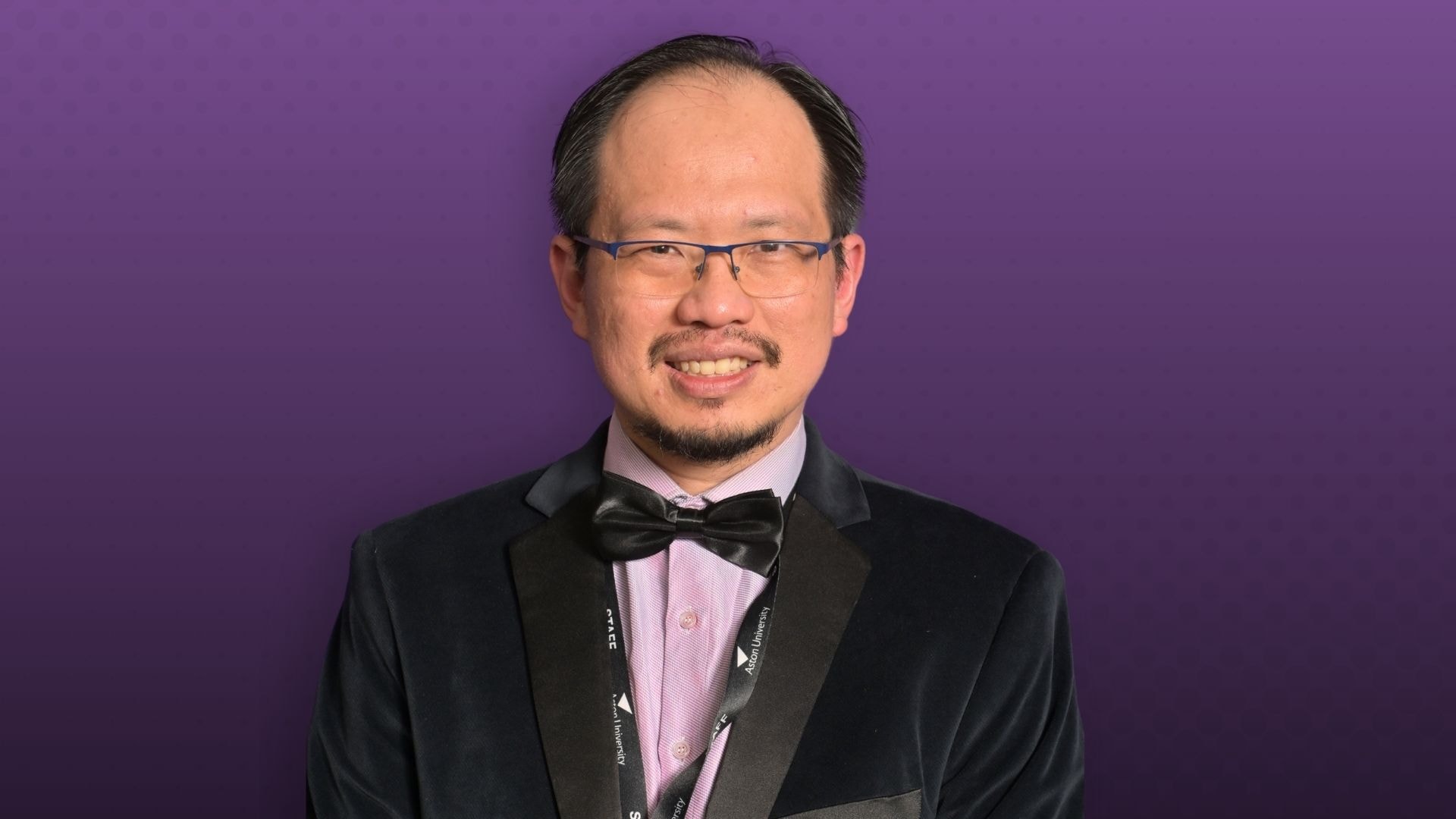
Written by: Victor Chang | Professor of Business Analytics, Aston University UK
Updated 3:00 PM UTC, January 20, 2026
Each week, I confront a challenge that is both exhilarating and daunting when I address my research team. On Monday, we will be analyzing patient data flows to ensure the security of healthcare. Financial risk algorithms are the subject of our modeling on Wednesday. Sustainability metrics for smart communities will be introduced on Friday. Each domain demands distinct cognitive strategies.
This is no longer uncommon. Disciplinary boundaries do not adequately address the complex issues of the present day. Data science and finance expertise are necessary to address climate change. Healthcare innovation demands an understanding of cybersecurity and an approach to educational reform. The inquiry is not whether an individual can collaborate across multiple disciplines; rather, it pertains to how this can be accomplished without sacrificing depth of understanding.
The answer took me aback. It originated in the field of computer architecture.
The Graphics Processing Units reveal
Three years ago, while evaluating students’ theses and early-career researchers’ work on parallel computing, I had a realization. Smart architecture is the means by which Graphics Processing Units (GPUs) generate power by dividing intricate problems into smaller tasks that are executed concurrently on specialized circuits.
The same redesign was required for my intellect.
All duties are treated equally in conventional time management. However, when you begin the day by developing cybersecurity protocols and then transition to healthcare analytics after lunch, you are demanding a complete cognitive reset. Research indicates that these mental gear adjustments consume as much as 40% of productive time. That is unsustainable for an individual who has expertise in five distinct fields.
The construction of cognitive partitions
The solution is analogous to distributed computing: establish distinct mental spaces for each domain and strategically arrange them.
I began allocating time based on discipline rather than task nature. Healthcare research periods were established on Mondays and Wednesdays. Everything that pertains to healthcare informatics — reading journals, analyzing patient outcomes, and composing papers — occurs during these three-hour periods. What are the mornings of Tuesday and Thursday? Pure cybersecurity.
This extends beyond straightforward scheduling. Cognitive resource allocation is the term. My subconscious initiates the processing of those issues days in advance when Friday afternoon is designated for sustainability research. On Tuesday, I observed pertinent articles. During the commute on Thursday, connections are formed. I arrive with momentum by Friday, as opposed to commencing from scratch.
Environmental constraints reinforced this effect. I allocated my corner desk to healthcare duties and surrounded it with medical journals. Market screens are evident in our collaborative space, where financial modeling takes place. Small modifications can be effective; for example, variations in desktop configurations, illumination, or music can serve as mental stimulants.
The paradox of depth
The most surprising aspect of this was that the depth of the work was not diminished by its structured distribution across different disciplines.
I refrain from responding to communications regarding financial models or reviewing sustainability proposals during a healthcare research block. The three hours are transformed into a comprehensive immersion. Five hours of fragmented time spent combining disciplines yield less genuine insight than a single, concentrated session.
The depth is the result of allowing momentum to accumulate within the problem space for an extended period. Context is established through the initial task. Middle phases establish connections. Synthesis is accomplished in subsequent phases. The cumulative potency of this process is destroyed when it is fragmented.
This method resulted in a significant advancement in the privacy of healthcare data last year. The realization was solely the result of my uninterrupted immersion in clinical data transfers over the course of several sessions.
The point of convergence of disciplines
Ironically, structured separation facilitates improved integration. My most valuable contributions are made at the intersection of disciplines, such as applying cybersecurity principles to healthcare data and utilizing financial risk models for sustainable investments.
There is a need for fluency in multiple domains, but it is not possible to process these cross-disciplinary insights simultaneously. I expressly designate specific integration periods — Friday afternoons or one week monthly — for working across boundaries. Integration is the deliberate synthesis of mature ideas, rather than the confused mingling of half-formed concepts.
My architecture diary every week
The following structure was developed over a period of two years:
- Monday morning: Healthcare research—clinical data analysis, healthcare literature, and hospital partnerships
- Monday evening: Administrative integration — emails, planning, and cross-disciplinary opportunities
- Tuesday morning: Cybersecurity research — security architecture, threat modeling
- Tuesday evening: Mentorship and instruction
- Wednesday morning: Healthcare continuation — writing, analysis, and project advancement
- Wednesday afternoon: Financial modeling — quantitative analysis and market research
- Thursday morning: Deepening specific projects — continuation of cybersecurity
- Thursday evening: Policy analysis and environmental data — sustainability research
- Friday morning: Pedagogy and curriculum development — innovation in higher education
- Friday afternoons or one week monthly: Working across boundaries
- Friday evening: Integration and synthesis — strategic planning, cross-disciplinary writing
While maintaining explicit boundaries, each discipline receives substantial, recurring time. The pattern becomes predictable, enabling both conscious planning and subconscious processing.
Knowledge management
Managing a vast amount of specialized knowledge requires the ability to work across disciplines. I required systems that could alleviate cognitive burdens without compromising accessibility.
I maintain a digital repository that is specifically designated for each discipline. I pick up where I left off when the sustainability block commences on Thursday.
I prevented knowledge decay by conducting routine review cycles. I schedule brief 30-minute maintenance reviews on off-weeks to monitor developments, review notes, and maintain cognitive pathways without full engagement.
Adequate bandwidth is increased through collaborative partnerships. I collaborate with specialized researchers in each domain, not delegating thought, but distributing detailed implementation while maintaining strategic direction. This further enhances the parallel processing paradigm by allowing my mind to coordinate a distributed cognitive network.
The energy dimension
Cognitive resources are utilized differentially by various disciplines. I schedule the technical analysis of cybersecurity in the morning, when logical reasoning is at its most effective, and then transition to the interdisciplinary work of sustainability in the afternoon, when creative connections are more easily formed. The integration work on Friday is well-suited for concluding the week, as the accumulation of exposure facilitates an unexpected synthesis.
This is not a matter of exerting oneself more. It involves collaborating with cognitive rhythms rather than opposing them.
The effect of compounding
This is the point at which the computational metaphor fails, and human minds surpass silicon. Over time, my mind accumulates knowledge.
Healthcare insights inform financial modeling. Educational technology is improved by cybersecurity reasoning. All other domains are enhanced by sustainability analysis. Each discipline serves as a lens that refines the others.
Disciplines began to communicate with one another by the third year. I now observe patterns that are imperceptible to specialists, such as governance structures from higher education that have the potential to transform healthcare administration, or risk frameworks from finance that elucidate cybersecurity decisions.
The way forward
This strategy resulted in unexpected accolades: I was named Data Leader of the Year at the British Data Awards, IT Industry Awards for cross-disciplinary innovation, and Cybersecurity Initiative of the Year for AI-powered security development. However, the genuine recompense is the profound influence it has on relevant fields.
Cross-disciplinary thinking is necessary to address the intricate issues of the present day. The query is not whether scholars can maintain depth while spanning disciplines. Is it possible to create cognitive architectures that enable the attainment of such profundity?
The response is affirmative. However, it necessitates the elimination of the fallacy of seamless multitasking. Instead, adopt structured parallelism: a meticulously planned schedule that prioritizes cognitive efficiency and facilitates genuine expertise across disciplines, allowing for focused, in-depth work in each domain.
The greatest power of your brain, similar to that of sophisticated computing architecture, is not attained by performing all tasks simultaneously; instead, it is attained by performing the appropriate functions in the correct sequence with complete attention and strategic design.
The multidisciplinary intellect is not a zero-sum trade-off between depth and breadth. It allows both when it is properly organized.
About the Author:
Professor Victor Chang is a leading researcher, consultant, and instructor in the fields of AI, cybersecurity, and data science at Aston University, UK. Having worked in technology innovation and education for more than 25 years, he has received numerous major honors, such as Cybersecurity Initiative of the Year 2025, Data Leader of the Year 2025, and the UK’s Inspirational Individual of the Year 2024.
His work focuses on real-world uses of cutting-edge computer technology in security, healthcare, and sustainable computing. Through educational efforts, Chang has helped more than 100,000 professionals worldwide and is still bridging the gap between academic research and practical application. He has published widely on subjects spanning from cloud computing to artificial intelligence applications in healthcare, and he holds graduate degrees in computer science.



 Elevate Your Personal Brand