
CDO Magazine Announces Global Data Power Women 2026 CDO Magazine proudly announces the Global Data Power Women 2026, recognizing an exceptional group of women executives who are driving enterprise transformation through data, analytics, and AI. Selecte...
Leadership Summit – Toronto – Omni King Edward Hotel – May 21, 2026 Join top AI and Data leaders in Toronto to explore the strategies, governance, and innovations driving enterprise performance. Connect, learn, and gain actionable insights — reserve your seat today.
Nominate Now | Top 30 Healthcare Innovators 2026 List Honoring the Executives Driving Measurable Transformation and Responsible Innovation Across the Healthcare Ecosystem.
Opinion & Analysis
AI Will Expose Weak Leadership Faster Than Any Technology — 5 Imperatives to Get Execution Right

Written by: Haroon Abbu | SVP of Digital Technology & Data Analytics at Bell and Howell
Updated 1:00 PM UTC, April 17, 2026

AI has quickly become the defining conversation in enterprise technology. Boardrooms are filled with discussions about its potential, and organizations are investing heavily in tools, pilots, and experimentation. Yet many are still struggling with a fundamental question: How do we turn AI into real, scalable business results?
From my experience leading transformation initiatives, the answer is clear. AI success is not primarily a technology challenge. It is a leadership, operating model, and execution challenge.
Optimization vs amplification
One of the most common mistakes organizations make is treating AI as a tool for optimization rather than a catalyst for transformation. As the saying goes, “the electric light didn’t come from improving the candle.” Yet many organizations are still applying AI to optimize existing processes instead of rethinking what is possible.
AI is not just a technology shift. It is a workforce and operating model transformation. The real opportunity is not incremental efficiency. It is amplification—rethinking how decisions are made, how work gets done, and how value is created.
The AI moment is already here
We are no longer talking about a future state. AI is already reshaping how organizations operate. At Microsoft, AI is writing a significant portion of production code. At Google, it contributes to more than a quarter of all code generation.
Companies like Shopify are rethinking hiring models, while enterprises such as Citi are retraining thousands of employees to work alongside AI.
These are not isolated experiments. They represent a structural shift in how work gets done. This shift is creating a wide range of reactions: excitement, optimism, concern, and uncertainty. That is natural. Every major technology wave, from electricity to the internet, has triggered similar responses. What makes this moment different from prior technology waves is both the speed and the breadth of impact. AI is not just changing tools. It is changing work itself.
AI is a workforce transformation
According to the World Economic Forum Future of Jobs Report, we may see 170 million jobs created and 92 million displaced by 2030. However, focusing only on job displacement misses the bigger story. The real transformation is happening at the skill level.
Nearly 40% of today’s skills may become obsolete within the next few years. This means organizations are not simply adopting new tools; they are redefining roles, capabilities, and operating models.
For Chief Data and Analytics Officers (CDAOS), this has profound implications. The mandate is no longer limited to building data platforms or deploying models. It now includes:
- Enabling workforce transformation
- Driving AI literacy across the organization
- Embedding AI into daily workflows
- Aligning data, technology, and business strategy
This is where leadership becomes critical.
Technology changes, leadership endures
Every major wave of innovation tests organizations. But more importantly, it tests leadership. AI does not redefine leadership principles; it reinforces them.
In times of disruption, leaders must provide:
- Clarity in direction
- Confidence in execution
- Trust in decision-making
One pattern is becoming clear across organizations: AI will not replace leaders. It will expose weak leadership.
Why? Because AI surfaces underlying issues: poor data quality, broken processes, fragmented systems, and unclear decision rights. Technology amplifies what already exists. It does not fix foundational problems.
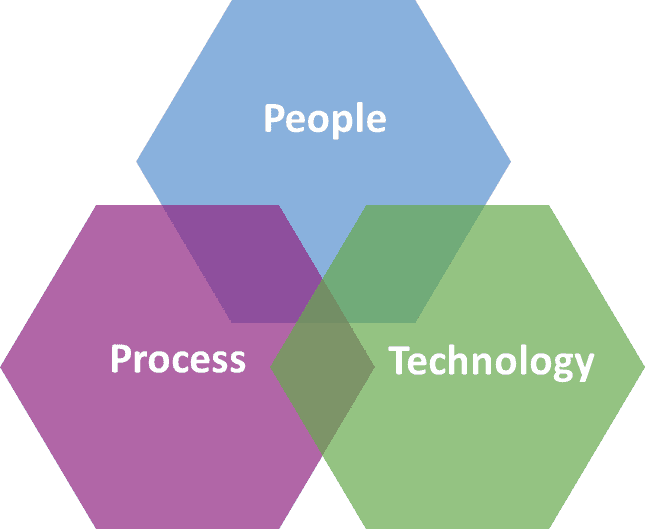
The foundation: People, process, and technology
Successful AI transformation requires alignment across three elements: People, process, and technology. Organizations often over-index on technology. But technology alone does not create value.
- People drive change, but they need clarity, skills, and trust.
- Processes create repeatability and scale.
- Technology amplifies both but only when the foundation is strong.
This is where many AI initiatives fail. Companies deploy advanced models on top of fragmented data and broken workflows, expecting transformational results. But AI is not a shortcut. It is a force multiplier.
AI readiness starts before AI
At Bell & Howell, one of our most important lessons was this: AI readiness does not start with AI. It starts with:
- Clean, reliable data
- Integrated systems
- Standardized metrics
- Operational discipline
We invested years building a connected ecosystem: linking service operations, field data, customer systems, and performance metrics. This allowed us to evolve along the analytics maturity curve:
- Descriptive: What happened
- Diagnostic: Why it happened
- Predictive: What will happen
- Prescriptive: What should we do
AI sits on top of this progression. Without it, AI initiatives remain fragmented and difficult to scale.
From insight to execution
A critical shift in our journey was moving from retrospective reporting to real-time execution. Dashboards explain the past. Value comes from influencing outcomes in the moment.
We developed operational capabilities such as SmartOps Dispatch, enabling:
- Real-time SLA monitoring
- Proactive issue resolution
- Exception-based management
AI builds on this foundation by embedding intelligence directly into workflows, guiding decisions in the moment, not after the fact. This is where AI transitions from analytics to operations.
Embedding AI into workflows
One of the most important principles for scaling AI is this: AI creates value only when it is embedded into workflows. Standalone tools and disconnected pilots rarely deliver sustained impact. Instead, organizations should focus on:
- Integrating AI into core systems (e.g., CRM, service platforms)
- Reducing friction in daily tasks
- Augmenting frontline decision-making
- Automating routine work while creating more time for humans to elevate the customer experience
The role of trust
As organizations scale AI, one factor consistently determines success: Trust. We are already seeing companies restructure workforces around AI. Some have made significant reductions while reinvesting in automation and digital capabilities. But the differentiator is not the decision itself;; it is how leadership communicates it.
Transparent, purpose-driven communication builds trust.
Without trust:
- Employees resist adoption
- Innovation slows
- Execution breaks down
Trust enables organizations to move with speed and confidence. It also creates the psychological safety required for employees to experiment, learn, and adapt.
5 leadership imperatives for AI
Based on practical experience leading large-scale transformations, five principles stand out:
- Build trust through transparency and intent: Clearly communicate why AI is being adopted and how it will impact the organization.
- Augment human judgment, don’t replace it: AI should enhance decision-making, not remove accountability.
- Treat AI as a change management journey: Invest in training, identify champions, and create space for experimentation.
- Start with high-impact use cases: Focus on problems with clear outcomes before scaling broadly.
- Design for experience, not just efficiency: Automate transactional work and elevate human interactions.
From capability to competitive advantage
Ultimately, AI is not about deploying models; it is about transforming how organizations operate. The companies that succeed will not be the ones that adopt AI the fastest.
They will be the ones who integrate it most effectively into their operating model.
This requires discipline, leadership alignment, and a relentless focus on execution. Because in the end, AI does not create value on its own, execution does.
And in this era, execution is leadership. And that is where true competitive advantage is built.
About the Author:
Dr. Haroon Abbu is the Senior Vice President of Digital Technology & Data Analytics at Bell and Howell, where he leads digital and AI transformation initiatives focused on leveraging advanced technologies and data to drive business value. He is recognized for translating data into impact by integrating enterprise platforms, streamlining processes, and enabling more effective, data-driven decision-making across the organization. Abbu has received multiple industry honors, including Data Leader of the Year finalist, DataIQ 100: Most Influential People in Data, the 2022 Global Top 100 Innovators in Data and Analytics, and the 2025 Standout 50 Service Leaders.
He also serves as Professor of Practice at NC State University, where he teaches and mentors students on digital leadership and AI transformation. A sought-after thought leader and keynote speaker, he is co-author of the book “Trust: The Winning Formula for Digital Leaders, a Practical Guide for Digital Transformation.”



 Elevate Your Personal Brand