
CDO Magazine Announces Global Data Power Women 2026 CDO Magazine proudly announces the Global Data Power Women 2026, recognizing an exceptional group of women executives who are driving enterprise transformation through data, analytics, and AI. Selecte...
Leadership Summit – Toronto – Omni King Edward Hotel – May 21, 2026 Join top AI and Data leaders in Toronto to explore the strategies, governance, and innovations driving enterprise performance. Connect, learn, and gain actionable insights — reserve your seat today.
The State of AI Reliability: Why Trust Is Becoming the Biggest Barrier to Scaling AI AI adoption is accelerating across the enterprise, but reliability is lagging. In a new research report, The State of AI Reliability: Perspectives from Data & AI Leaders, CDO Magazine, in partnership...
Opinion & Analysis
3 Hard Lessons From Scaling AI: What Leaders Still Get Wrong About Operating Models, Talent, and Data
Why a new focus on our organization, not just technology, will define the next wave of AI advantage

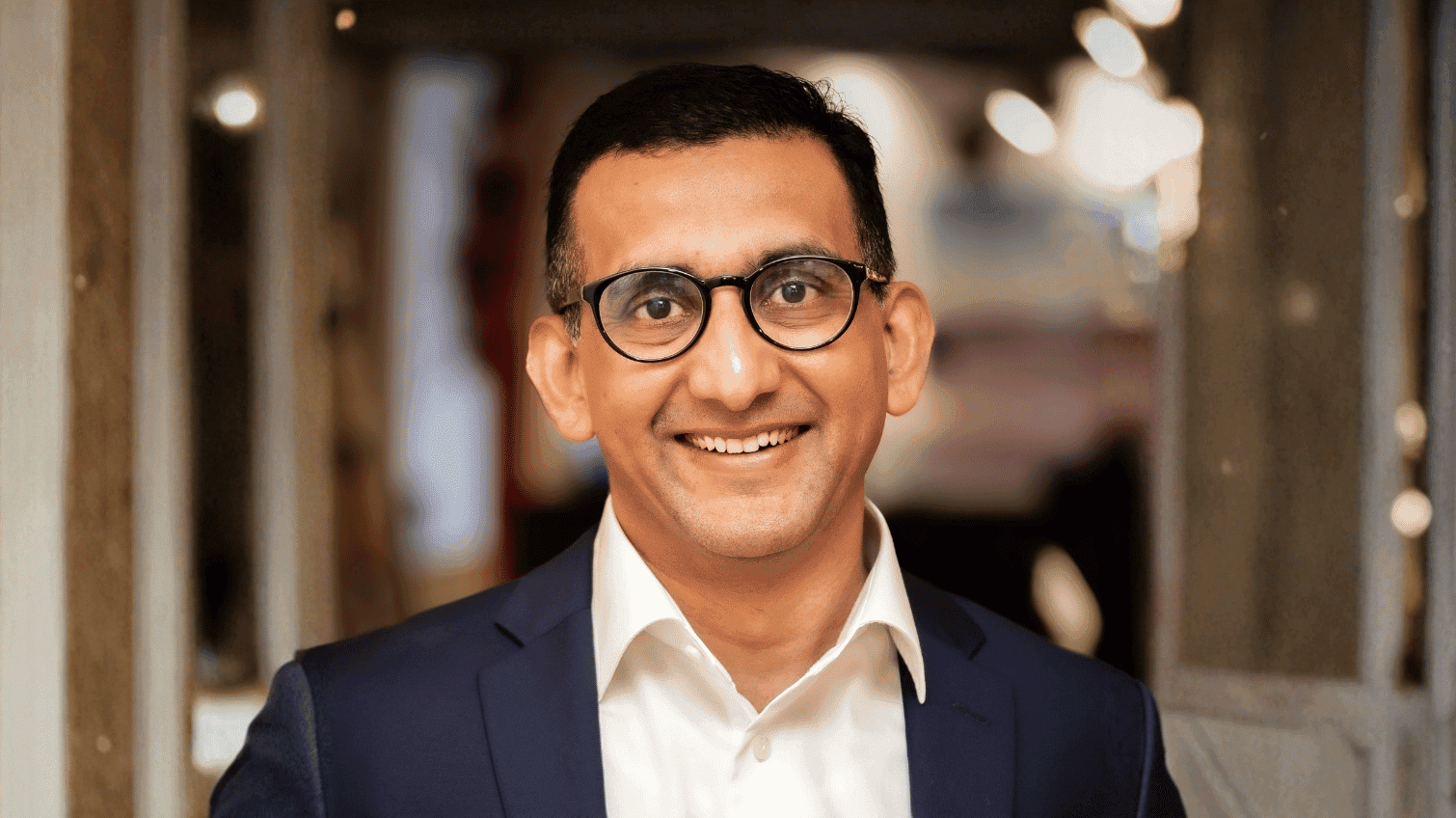
Written by: Rahul Shah | Global Chief Digital & Information Officer (CDIO), Mars Pet Nutrition
Updated 2:16 PM UTC, April 23, 2026
The debate around AI adoption has decisively shifted. The question is no longer if, but how, and the primary constraints are no longer the models, but our own organizations. While AI technology is ready to scale, a critical gap is emerging between its potential and the readiness of our culture, our people, and our data.
My experience has shown that competitive advantage will not come from simply having the most sophisticated algorithm. It will be won by those who solve the far more complex human and structural challenges of enterprise adoption. Our mandate as leaders is no longer just to manage data or technology; it is also to re-architect our organizations for an AI-native future.
On culture: Evolving the operating model for agility and scale
The rigid, centralized operating models that gave us stability in the past have become our biggest bottlenecks. In the AI era, speed and context are paramount, which is why we must evolve toward a “freedom in a framework” approach. This isn’t consultancy speak; it’s a strategic imperative to design a new way of working.
The “framework” is our domain as leaders: robust governance, clear data ownership protocols, and a secure, standardized platform. The “freedom” is for our associates in business domains, working in fused teams, to innovate within those guardrails without waiting months for a centralized team to service a request. This federated approach helps us balance enterprise-grade security with the bottom-up energy needed to drive real adoption.
We are running dozens of pilots to find value, but the hard truth is that proofs of concept are easy; scalable value is not. The real challenge is integrating these successes into the P&L. My philosophy is to work “decision back, not application first.”
We must relentlessly ask: what critical business decision does this enable, and is our architecture built to support that decision at scale? This forces a discipline that moves us beyond shiny objects and toward tangible ROI.
On people: Building talent for a human-in-the-loop world
Generative AI (GenAI) is more than a productivity tool; it’s a new, semi-autonomous member of the team. This requires a fundamental rethink of our talent strategy. The skills that defined a great data scientist or engineer five years ago are changing. Today, we need people who can not only build models but also design, govern, and collaborate with AI agents in a human-in-the-loop system.
As the United Minds AI Adoption Debates report notes, many AI failures are, at their core, people and change-management issues. As leaders, our role is to demystify the technology and create psychological safety. We’ve run immersive sessions where our leadership teams openly experiment and fail with AI co-pilots. This is crucial. If leaders project fear or uncertainty, our teams will never embrace the risks necessary for innovation.
This journey requires a shift from “data literacy” to “AI literacy.” We must empower our business-facing Associates to become builders and creators, not just passive consumers of dashboards, providing platforms that are not only powerful but also intuitive enough to foster widespread experimentation.
On data: Architecting for context, not just reporting
For years, we architected our data stacks for reporting and business intelligence. We built rigid data warehouses optimized for structured queries. That architecture is fundamentally unsuited for the demands of GenAI, which thrives on context, nuance, and unstructured data.
That architecture is fundamentally unsuited for the demands of GenAI, which isn’t just changing the tools we use; it’s changing the very role of data itself. Today, AI can bridge that last mile, translating complex data directly into recommended actions in natural, human language. With agentic AI, it can even begin to execute those actions.
This is not a trivial shift. If an organization fails to understand this, it will continue to organize data for passive reporting, not for active, contextual dialogue with an AI, and will miss out on the full potential available today.
The mission behind our digital transformation is to understand pet parents and their world in all its complexity, guided by our Purpose: A better world for pets. This means moving beyond transactional data. For example, our GREENIES Canine Dental Check tool, which uses AI to help pet parents monitor their dog’s dental health, relies on visual, contextual data that doesn’t fit neatly into a SQL database. It’s a prime example of how AI requires us to think beyond our legacy systems.
AI is only as good as the context it is given. If our data remains fragmented in operational silos, its understanding will be shallow and its outputs generic. The strategic mandate for every data and technology leader is to spearhead the transition from a reporting-focused data estate to a truly AI-ready one.
This means investing in a flexible data fabric, implementing robust metadata solutions, and championing the concept of “data as a product,” where curated, trusted datasets are made available for others to build upon.
The debate over AI’s potential is over. The technology is here. The defining question for us as leaders is whether we are ready to do the hard organizational work required to prepare our culture, our people, and our data for the journey. The advantage will belong to those who do.
*This article includes insights from United Minds’ The Great AI Adoption Debates 2026.
About the author:
Rahul Shah is the Global Chief Digital & Information Officer (CDIO) at Mars Pet Nutrition, where he spearheads turning the company’s pet parent centric digital and AI innovation strategy into action.
With over 27 years of experience, Shah brings a unique blend of expertise in business strategy, human change and technology enablement to his role. His impressive career includes a decade in technology development, specializing in semiconductors, and another decade in strategy consulting.
Shah’s extensive experience spans a wide range of sectors, including retail, FMCG, heavy asset industries, shipping, medical, renewable energy, and airlines. He excels at transforming organizations by seamlessly integrating data-driven approaches, human behaviour and change management to create mutual value for end-consumers and achieve sustainable business results. His global perspective, gained from working in the Nordics, the U.S., and various parts of Europe and Asia, provides him with a deep understanding of cultural diversity and its profound impact on business.



 Elevate Your Personal Brand