
What Is a Chief Data Officer in 2026? Many people working within the data industry are saying the same thing: the role of the Chief Data Officer (CDO) has changed – but how? CDO Magazine began an expert survey to find out. We recent...
2026 CDO Report: Meet the Modern Data Team New survey of VP & C-level data and AI leaders confirms what’s stalling AI transformation.
Generative + Agentic AI: Moving From Experimentation to Enterprise Scale Generative and agentic AI are making their way into enterprise production, bringing new questions for Chief Data Officers (CDOs) and other data and AI leaders responsible for making these technologies...
Community
AI-Ready Data Needs More Than Quality: Atlanta Leaders Put Business Context at the Center
At CDO Magazine’s Atlanta Roundtable Exchange, data and AI leaders examined why scaling AI requires business context, stronger governance and organizational change alongside trusted data.

Written by: Camille Prado, Global Editor, CDO Magazine
Updated 2:40 PM EDT, October 9, 2026
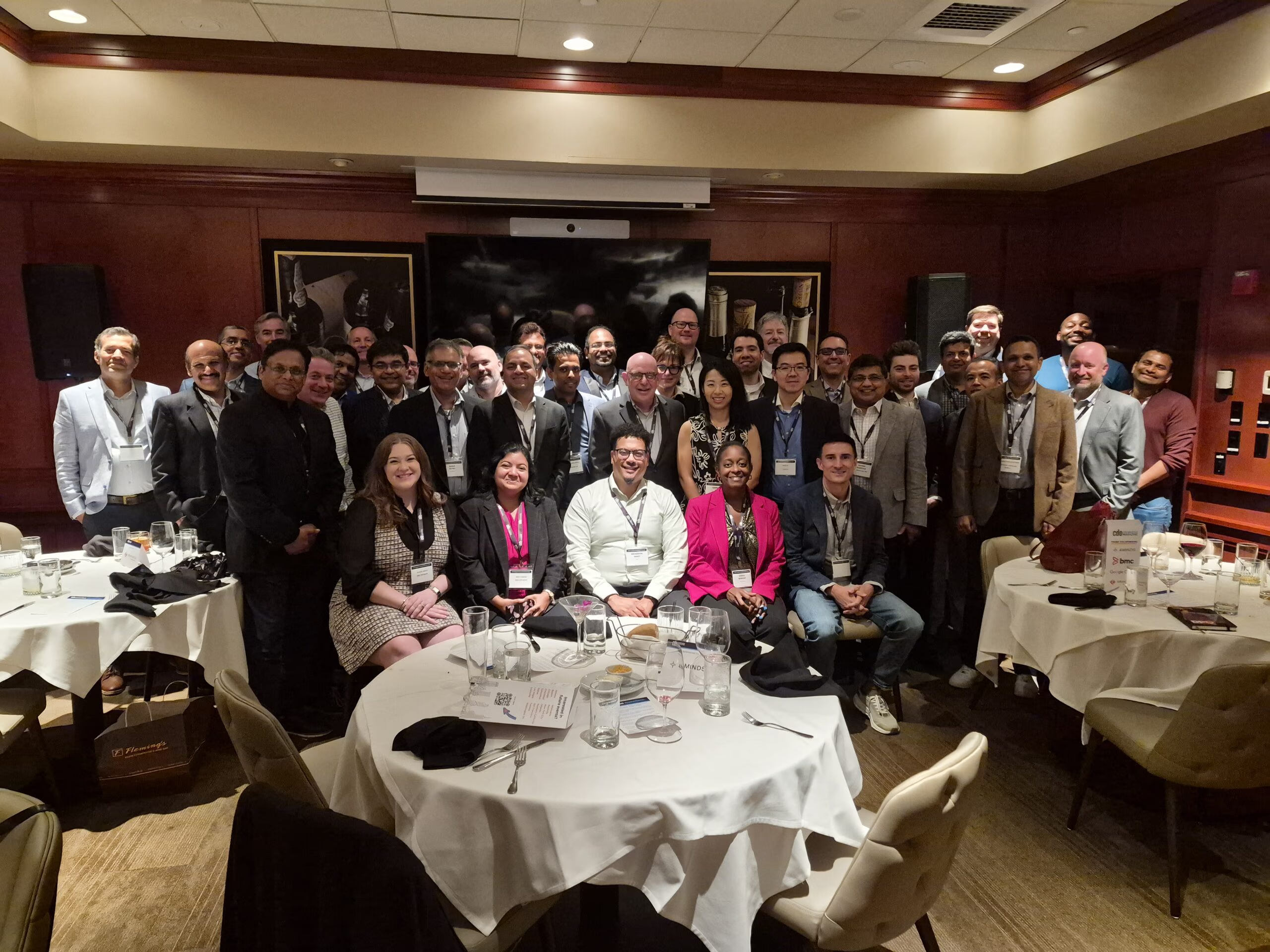
Data, analytics and AI leaders gather at the CDO Magazine Atlanta Roundtable Exchange on October 7, 2026.
Clean data has long been a prerequisite for analytics. As organizations move from AI experimentation toward systems capable of making and acting on decisions, Atlanta data leaders argued that quality alone is no longer enough.
At the CDO Magazine Atlanta Roundtable Exchange on October 7, leaders at different stages of AI maturity discussed what it takes to move AI from experimentation to enterprise impact. Their conversation centered on a more demanding definition of AI readiness: trusted data enriched with enough business context for AI systems to interpret information appropriately, governance capable of overseeing increasingly autonomous systems, and organizations prepared to change how work gets done.
About a third of the attendees were participating in a CDO Magazine event for the first time. Despite the challenges surrounding data readiness, governance and adoption, the mood was notably optimistic about AI’s potential beyond efficiency.
AI-ready data needs business context
For Arun Gupta, Equifax Chief Data Officer, USIS, the foundation starts with expanding the definition of AI-ready data.
“AI-ready data isn’t just about cleaner pipelines. It’s about turning trusted, well-governed information into a business context that makes every model, decision, and customer interaction smarter. When data is accurate, accessible, and understood in context, AI can truly deliver scalable business outcomes.”
That distinction shaped much of the evening’s discussion. Participants explored not only whether enterprise data is clean, accessible and governed, but whether AI systems have enough context to use that data appropriately in actual business situations.
The conversation moved from that principle to how organizations can establish and communicate business context in practice. Chas Fiorenza, Google Cloud Customer Engineer, Data Analytics, pointed to several approaches discussed at the table.
“We had a candid conversation about building a strong foundation for AI, including what semantic models, knowledge graphs and ontologies actually mean in practice. I think we all left more knowledgeable.”
The discussion also returned to a practical constraint: AI value ultimately depends on the use case and the business process an organization is trying to improve. Sudip Ghose, Belden Vice President, Enterprise Data, observed that while organizations in the room were at different stages of AI adoption, clean, scaled data and strong context remained essential to creating value.
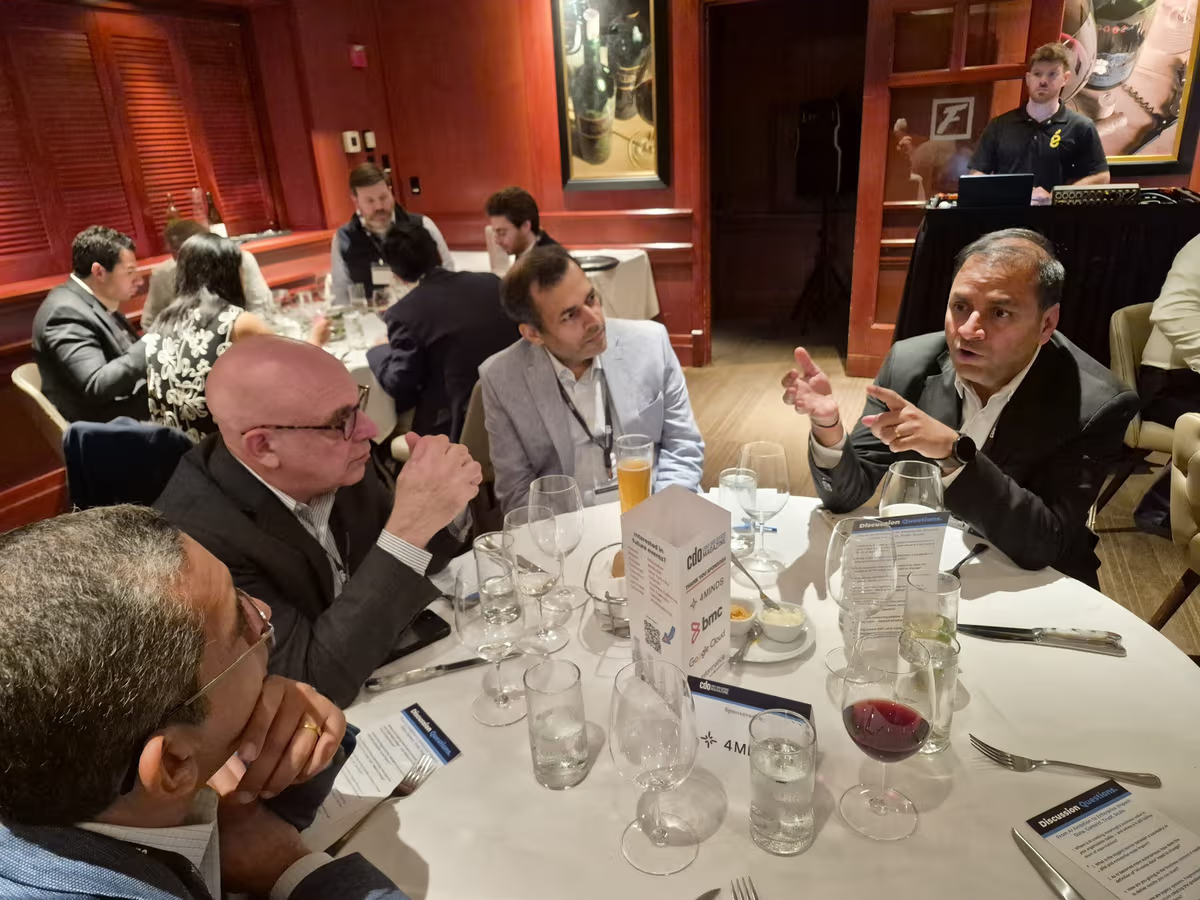
Arun Gupta, Equifax Chief Data Officer, USIS, participates in the discussion at the CDO Magazine Atlanta Roundtable Exchange.
Agentic AI changes the governance question
As AI moves from generating outputs toward taking actions, the governance challenge changes with it.
Moataz Mahmoud, First Citizens Bank SVP, Enterprise Data Management, raised the question of whether traditional approaches to data and AI governance adequately address the business context and decision logic autonomous systems use.
He pointed to decision intelligence as a potentially missing layer in operating models — one that can govern business context and decision logic from intake through delivery.
Runtime governance becomes particularly important when AI is used for critical workloads. Because AI systems are nondeterministic, reproducing the exact response that led to a problem may not always be possible.
Mahmoud said organizations therefore need the ability to reconstruct what happened:
“This makes runtime traceability and the ability to reconstruct the decision trail essential to scaling agentic AI with confidence.”
The conversation also surfaced a less obvious consideration: cost. Mahmoud noted that when agents access overlapping information across federated data environments, redundancy can result in unnecessary token consumption.
Taken together, those concerns move AI governance beyond policies established before deployment. Leaders are also confronting what happens while AI is operating: what context an agent used, what decision it made and what action followed.
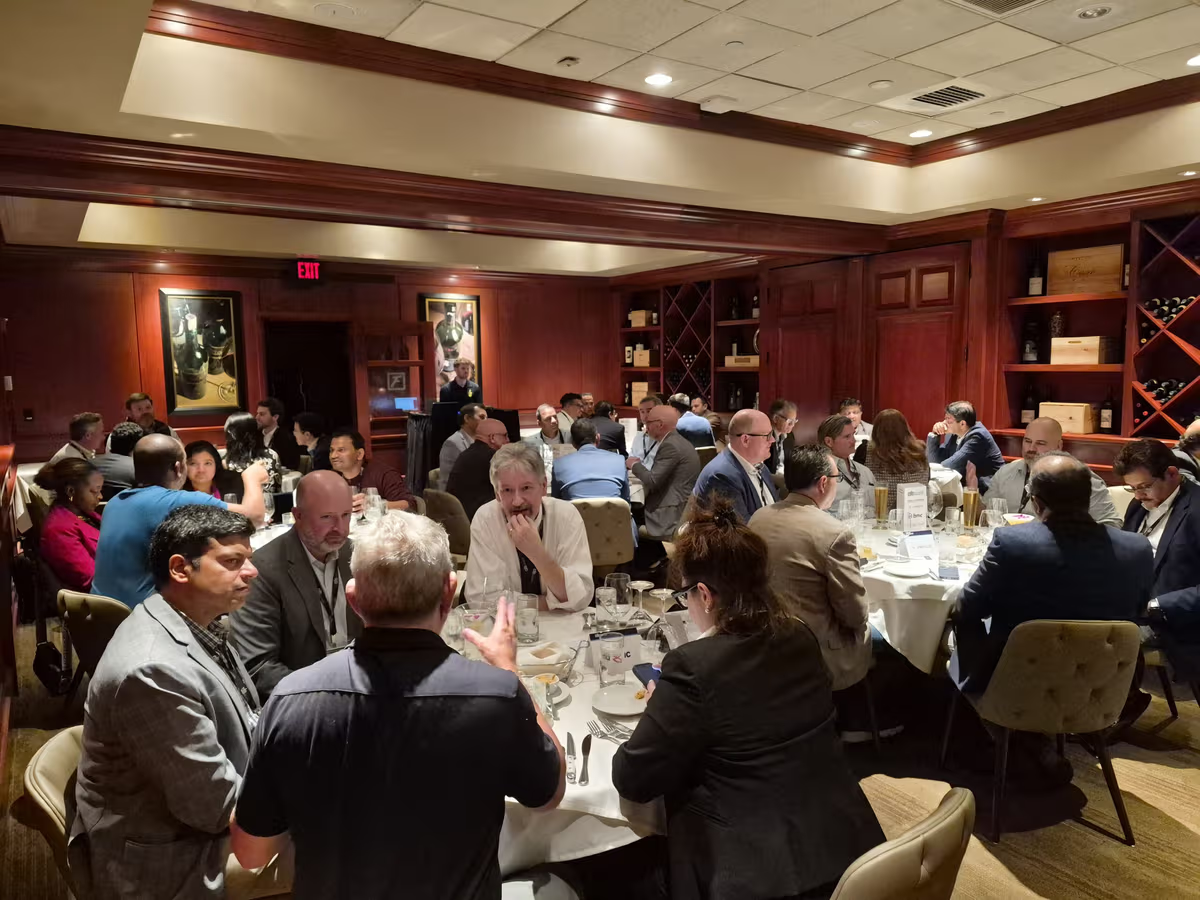
Atlanta data and AI leaders exchange perspectives on data readiness, agentic AI governance and the realities of scaling enterprise AI.
Scaling AI is also a change-management problem
Technology and governance can only carry an AI initiative so far.
Rama Ryali, McKesson Head, Data Platform, Compliance & Operations, distinguished between the roles of change strategy and change management in the AI maturity journey. Change strategy defines how an organization intends to progress, while change management equips people with the skills and behaviors required to adopt and sustain new ways of working.
Ryali also pointed to another source of unreliable AI outcomes: shortcomings in both prompts and data. Scaling adoption, he said, requires organizations to mature both their prompt practices and their underlying data foundations.
The human side of adoption was also central to Sammi Li, Flagstar Bank Head, Client Insights & Analytics, who saw considerable optimism among leaders despite their different levels of maturity.
“While AI is already helping us work faster, I believe the greater opportunity lies in augmenting human thinking, elevating decisions, and unlocking entirely new possibilities. Getting there is as much about change management as technology, and we’re still in the early chapters of what’s possible.”
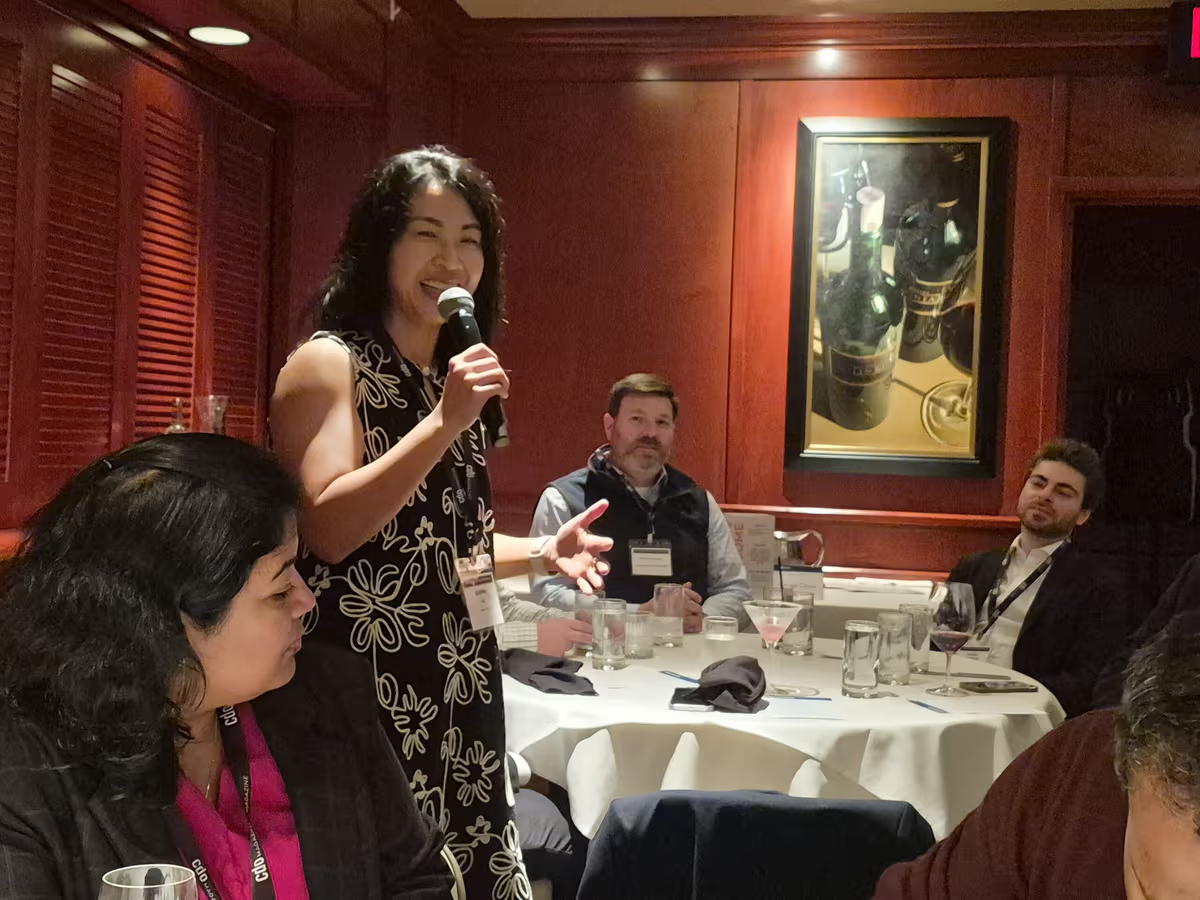
Sammi Li, Flagstar Bank Head, Client Insights & Analytics, joins the peer discussion on AI adoption and the role of organizational change.
That outlook pushed the conversation beyond the familiar question of how much work AI can automate. Leaders also considered what becomes possible when AI helps people reason differently, make better decisions or pursue opportunities that were previously impractical.
What humans still do better
That optimism did not erase the role of human judgment.
During introductions, attendees were asked to name something they could do better than AI. One participant answered simply: “empathy.”
The answer stayed with Kendra Minott, BMC Software Account Manager, who connected it to the evening’s broader discussion.
“It was such a simple, honest reminder that while technology will continue to evolve, the human element still matters.”
Minott also noted how similar many of the challenges were across industries, particularly the dependence of AI outcomes on the quality of the underlying data.
The exchange reinforced a tension organizations will continue to confront as AI becomes more capable: autonomy makes context and oversight more important, not less.
AI-ready enterprises will need more than models and clean pipelines. They will need to define the business context machines should use, understand how AI reaches and acts on decisions, and prepare people to work differently alongside those systems.
The opportunity discussed in Atlanta was larger than efficiency. But realizing it depends on getting those foundations right.
Kevin Fleet, Informatica from Salesforce VP, Global Value Delivery & Operations, also pointed to the value of bringing leaders together for candid peer exchange.
“I thought the event format was great and created an environment for insightful discussions. I would definitely recommend participating again in the future.”
Executives attending the CDO Magazine Boston Roundtable Exchange included:
- Mark Arnold, CRH PLC BI Vice President, Data Analytics
- Viswa Avireddi, Mueller Water Products Sr. Director, Enterprise Data and AI Solutions
- Amit Dingare, PRGX Chief AI Officer
- Sudipto Ghose, Belden Inc. Vice President, Enterprise Data
- Siddharth Goyal, MiTek Director, Artificial Intelligence
- Arun Gupta, Equifax Chief Data Officer, USIS
- Brandon Hart, Pulte Sr. Data Analyst
- Seth Holladay, Finastra Head, Customer Insights
- David Hu, Acosta Group SVP, Data, Analytics and Measurement
- Mark Jackson, Piedmont Healthcare Chief Data Officer
- Ram Kumar, AT&T Executive Director, IT
- Sammi Li, Flagstar Bank Head, Client Insights & Analytics
- Phillip Mahan, Go To Foods LLC Sr. Director, Privacy & Compliance
- Moataz Mahmoud, First Citizens Bank SVP, Enterprise Data Management
- Pramod Misra, Snellings Walters Insurance Agency Director, Data Analytics & AI Automation
- Paul Mohl, Fiserv Director
- Gerson Morales, MiniMed GTM, Strategy & Operations Leader
- Ajit Munjuluru, Grady Health Advanced Analytics Leader
- Tirumalarao Naidu, MARTA Manager, Customer Technology Data
- Jim Needle, Senior Data Analyst
- Satish Padiyar, HCSC Div. VP, Data & Analytics
- Pradeep Parvathipuram, SiteOne Landscape Supply VP, Enterprise Architecture
- Dinakar Potu, Truist SVP, Software Engineering
- Vadim Radinsky, MediaNews Group Director, Data Science, Analytics, Product
- Rama Ryali, McKesson Head, Data Platform, Compliance & Operations
- Marty Samadder, Novelis Inc. Head, Global IT Enterprise Architecture
- Abhishek Sen, Grady Health System Head, Innovation & AI Strategy
- Krishna Tummalapalli, Tokio Marine HCC VP & Head, Business Technology
- Carlo Viamonte, Elevance Health Managing Medical Director, Carelon AI Services Leadership Team
- Andrew Vondrak, Southern Company Gas Director, Enterprise Decision Support & Data Governance
- Richard Wise, Macy’s Director, Data Governance Office, Enterprise Data & Analytics
- Aisha Wright, MUFG Bank Data Governance Business Analyst
- Kendra Minott, BMC Software Account Manager
- Matthew Halliday, 4Minds Chief Product Officer
- Bill Neal, 4Minds Senior Client Advisor
- Claybourne Barrineau, Google Cloud Customer Engineer, Big Data
- Chas Fiorenza, Google Cloud Customer Engineer, Data Analytics
- Kevin Fleet, Informatica from Salesforce Vice President, Global Value Delivery & Operations
- Wesley Matthews, Informatica from Salesforce Data Governance Specialist
- Dara Merlin, Pellera Account Executive
- Jenna George, CDO Magazine Community Director
- Alexis Jennings, CDO Magazine Events Specialist
- Camille Prado, CDO Magazine Global Editor
CDO Magazine thanks 4Minds, BMC, Google Cloud and Informatica from Salesforce for their support of the Atlanta Roundtable Exchange.



 Elevate Your Personal Brand