
CDO Magazine Announces Global Data Power Women 2026 CDO Magazine proudly announces the Global Data Power Women 2026, recognizing an exceptional group of women executives who are driving enterprise transformation through data, analytics, and AI. Selecte...
Leadership Summit – Toronto – Omni King Edward Hotel – May 21, 2026 Join top AI and Data leaders in Toronto to explore the strategies, governance, and innovations driving enterprise performance. Connect, learn, and gain actionable insights — reserve your seat today.
The State of AI Reliability: Why Trust Is Becoming the Biggest Barrier to Scaling AI AI adoption is accelerating across the enterprise, but reliability is lagging. In a new research report, The State of AI Reliability: Perspectives from Data & AI Leaders, CDO Magazine, in partnership...
AI News Bureau
UnitedHealthcare Launches AI Companion Avery to Streamline Member Experience

Written by: CDO Magazine
Updated 6:49 PM UTC, April 20, 2026
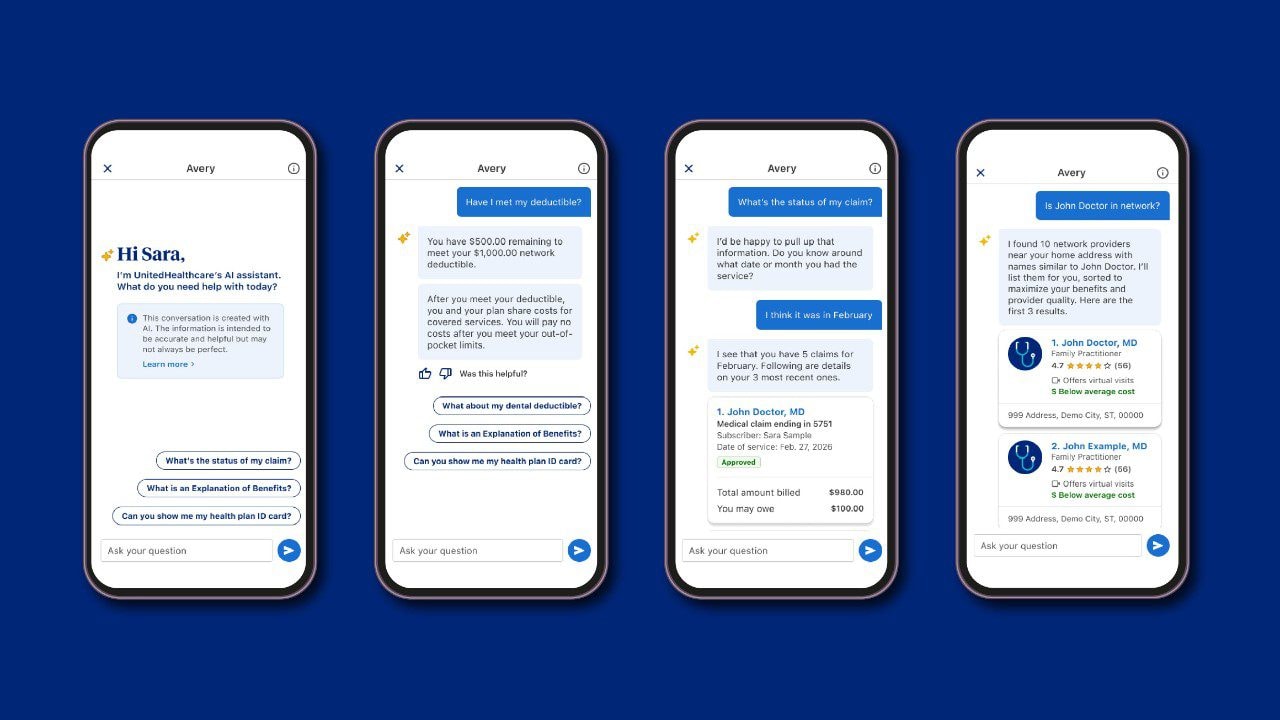
UnitedHealthcare has introduced a generative AI assistant, Avery, designed to simplify how members access and manage their healthcare while improving customer support efficiency.
The AI tool, available through the UnitedHealthcare app and website, provides personalized guidance based on an individual’s benefits and profile. It offers real-time assistance across a range of services, including coverage details, appointment scheduling, cost estimates, claims status, and provider searches.
“People want healthcare to be easier to use and tailored to their personal needs,” said Dan Kueter, CEO of UnitedHealthcare’s commercial business. “Avery is one way we are responding to consumer demand for a more coordinated and simpler experience and enabling our members to focus on what matters most: getting and staying well.”
Avery is currently accessible to about 6.5 million members with employer-sponsored plans and 160,000 Medicare Advantage users. The company plans to expand availability to more than 20 million members across commercial, Medicare, and Medicaid plans by the end of the year.
The system is designed to reduce reliance on live support, with the company saying that most users do not require assistance from a customer advocate. When human intervention is needed, Avery transfers the interaction along with a full summary, allowing representatives to respond more efficiently without requiring users to repeat information.
The AI also supports customer advocates by providing real-time insights and administrative assistance, helping them resolve issues faster and focus more on member needs.
Avery integrates data from multiple sources into a single interface, enabling users to navigate benefits, compare care options, and understand costs more easily. It can also contact in-network providers to schedule appointments on behalf of members.
UnitedHealthcare said the tool operates under established governance frameworks to ensure safety, fairness, and privacy, with human oversight guiding its outputs.



 Elevate Your Personal Brand